Loading
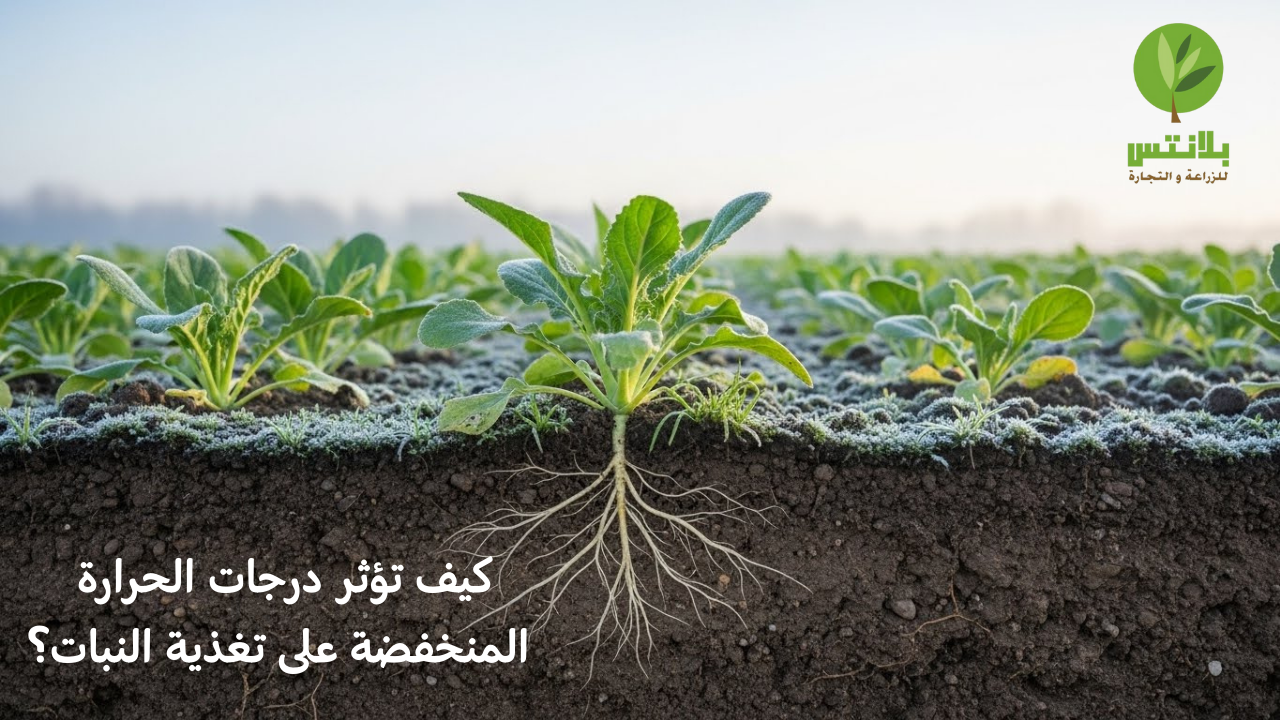
In this article, we explain how low temperatures affect nutrient absorption and outline the best practices to reduce this impact and maintain plant health during winter.
At low temperatures, the biological activity of roots decreases.
Roots become less efficient at absorbing water and dissolved nutrients.
This negatively affects vegetative growth and the formation of new roots.
(Migma Rooter) – A strong root network for high productivity
Potassium (K₂O): 10%
Free amino acids: 5%
Nitrogen: 2.5%
Carbon and organic matter: 76%
Cold conditions slow down physiological activities.
Nutrient movement inside the plant decreases.
Even when fertilizers are available, the plant cannot utilize them efficiently.
One of the most temperature-sensitive nutrients.
Deficiency appears as weak root growth and leaf discoloration.
Although present in the soil, its uptake significantly decreases in winter.
Uptake decreases due to reduced root activity.
Excess nitrogen during winter may lead to weak and fragile growth.
Such as iron, zinc, and manganese.
Deficiency symptoms become more evident in cold conditions.
Especially in alkaline soils.
(Bastion)
Iron (Fe) chelated with EDDHA: 6%
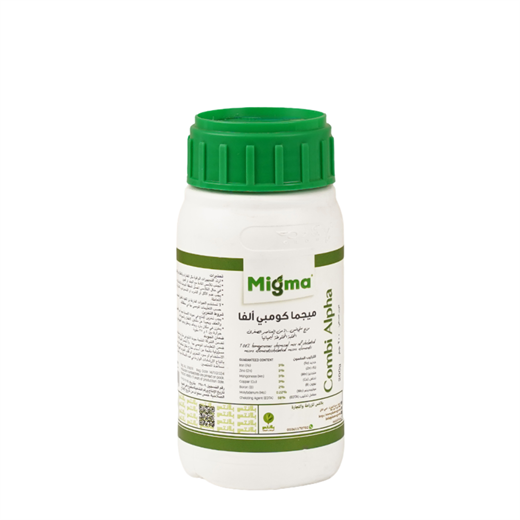
(Migma Combi Alpha)
Boron (B): 2%
Chelated Iron (Fe): 3%
Molybdenum (Mo): 0.22%
Zinc (Zn): 3%
Amide Nitrogen: 2.5%
Manganese (Mn): 3%
Copper (Cu) chelated with EDTA: 3%
Reduced uptake efficiency rather than fertilizer deficiency
Fixation of some nutrients in the soil due to cold temperatures
Improper timing or method of application
Weak roots unable to utilize available nutrients
📌 Therefore, the solution is not always increasing the dosage, but rather improving the timing and method of fertilization.
Strong roots are essential for cold tolerance and improved nutrient uptake.
Use moderate fertilizer rates.
Avoid excessive application, especially nitrogen.
Use highly stable chelated forms.
Foliar application is more effective during winter.
Apply sprays during mild temperature periods.
Avoid spraying during frost or extreme cold.
Provide balanced rather than intensive nutrition
Support plants with nutrients that enhance stress tolerance
Monitor plant condition regularly instead of relying on a fixed program