Loading
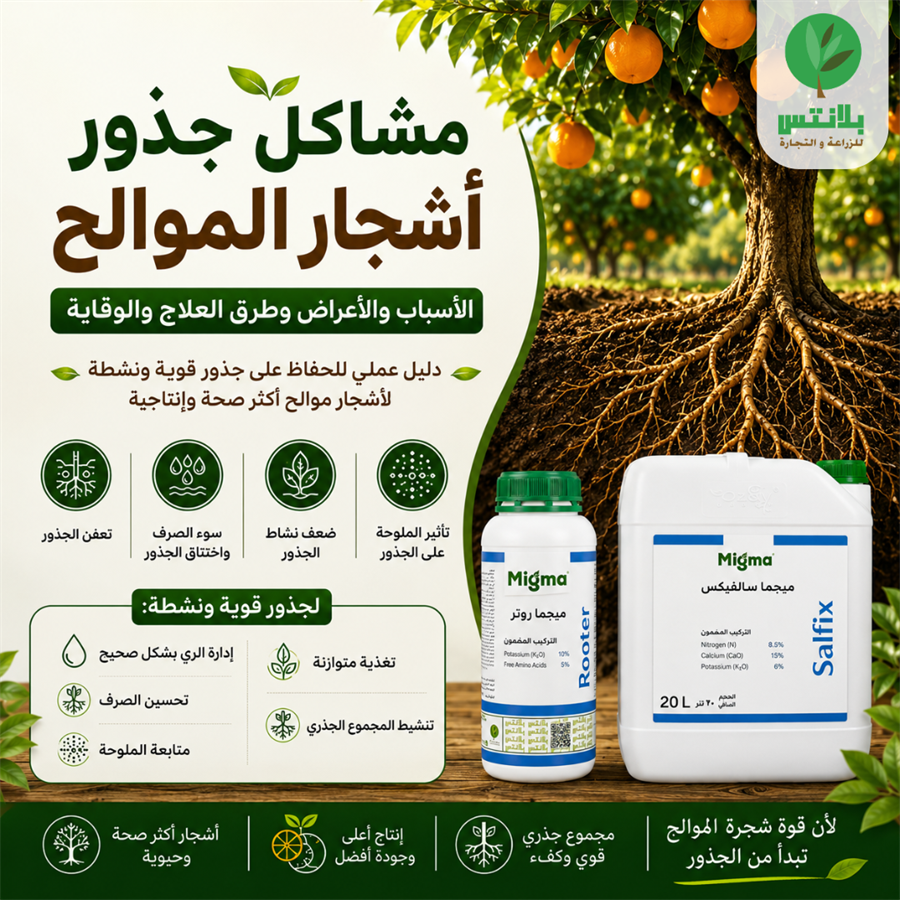
Roots are among the most vital parts of citrus trees. They do not only anchor the tree in the soil but also play a key role in water and nutrient uptake, supporting vegetative growth, maintaining tree vigor, and contributing to overall productivity.
Although most root problems develop below the soil surface and remain hidden from the farmer, their effects can become clearly visible in the upper parts of the tree. These effects may include poor growth, leaf yellowing, reduced tree vigor, and a decreased ability to efficiently benefit from irrigation and fertilization programs.
Therefore, understanding the most common root problems in citrus trees, along with their causes and symptoms, can help farmers detect issues at an early stage and take appropriate action before they significantly affect tree health and crop productivity.
Roots perform several essential functions that directly affect citrus tree health, including:
Therefore, maintaining an active and healthy root system is one of the key foundations for supporting the overall health and growth of citrus trees.
Root rot is one of the major problems that can affect citrus trees. It is often associated with excessive soil moisture and poor drainage, which can create favorable conditions for various soil-borne pathogens.
Symptoms may include:
Factors that may contribute to root rot include:
Prevention starts with proper irrigation and drainage management and avoiding prolonged soil waterlogging, while regularly monitoring the condition of the root system.
If a disease infection is suspected, the cause should be accurately identified through proper examination and diagnosis, followed by an appropriate control program based on the specific condition and farm environment.
Roots need water, but they also need oxygen available in the soil pores. When soil remains waterlogged for extended periods, oxygen availability to the roots decreases, affecting their activity and vital functions.
This problem can be reduced by:
A soil may be free from an obvious disease problem, yet citrus trees may still suffer from low root activity, resulting in reduced efficiency in water and nutrient uptake.
This can be associated with several factors, including:
In such cases, supporting root activity and encouraging healthy root growth becomes an important part of citrus tree management programs.
Salinity is one of the factors that may affect the performance of citrus tree roots, particularly in areas where irrigation water or soil salinity is high.
High salinity may lead to:
Therefore, it is important to regularly monitor irrigation water quality and conduct periodic soil and irrigation water analyses, while implementing appropriate salinity management programs according to the conditions of each farm.
In cases of high salinity, specialized products can be incorporated into a salinity management program, such as Megma Salvix, which can be applied at a rate of 1.5 liters per feddan, according to the appropriate agricultural program and farm conditions.
Note: The final application rate should be verified according to the approved product label and the technical recommendations for the crop.
Maintaining a healthy root system requires attention to several integrated agricultural practices, including:
Trees should receive their water requirements without allowing the soil to remain waterlogged for extended periods, while considering tree age, soil type, and climatic conditions.
Good drainage helps create a suitable environment for root growth and reduces the risk of root suffocation and root rot.
Regular analysis helps detect salinity problems at an early stage and allows appropriate action to be taken before their impact on roots and trees becomes more severe.
Citrus trees require a balanced nutrition program that is appropriate for the tree's age, growth stage, and soil conditions.
Supporting root activity and encouraging the development of a strong root system can be an important part of farm management programs, particularly during periods of stress or when root growth is weak.
When managing the root system of citrus trees, specialized products designed to activate roots and support root growth can play a role as part of an integrated crop management program.
Megma Rooter is one of the solutions that can be incorporated into citrus root care programs to help activate roots and support the development of a strong and active root system.
Maintaining active roots is an important part of a farmer's strategy to preserve citrus tree vigor, especially when combined with proper agricultural practices such as:
It is important to emphasize that root activation does not replace addressing the underlying cause of a root problem. If root rot, poor drainage, or a disease infection is present, the underlying issue must first be properly diagnosed and managed.
Because root problems often begin below the soil surface, farmers should monitor the visible signs that may appear on trees, including:
When these symptoms appear, it is recommended to examine the root zone and analyze the soil and irrigation water rather than relying solely on visible symptoms to identify the cause of the problem.
The health of a citrus tree begins below the soil surface. Therefore, caring for the roots is just as important as caring for the leaves and fruits.
Providing a suitable environment for root growth, combined with proper irrigation and drainage management, monitoring salinity, providing balanced nutrition, and supporting root activation when needed, are all important factors in maintaining healthy and vigorous citrus trees.
Megma Rooter can be incorporated into root care programs to help activate roots and support the development of a strong and active root system, while Megma Salvix can be used as part of salinity management programs according to soil and irrigation water conditions and the overall agricultural program.
Ultimately, effective root management starts with accurately diagnosing the problem and then selecting the appropriate program that combines sound agricultural practices with specialized solutions.
Because the strength of a citrus tree starts with its roots. 🌱🍊