Loading
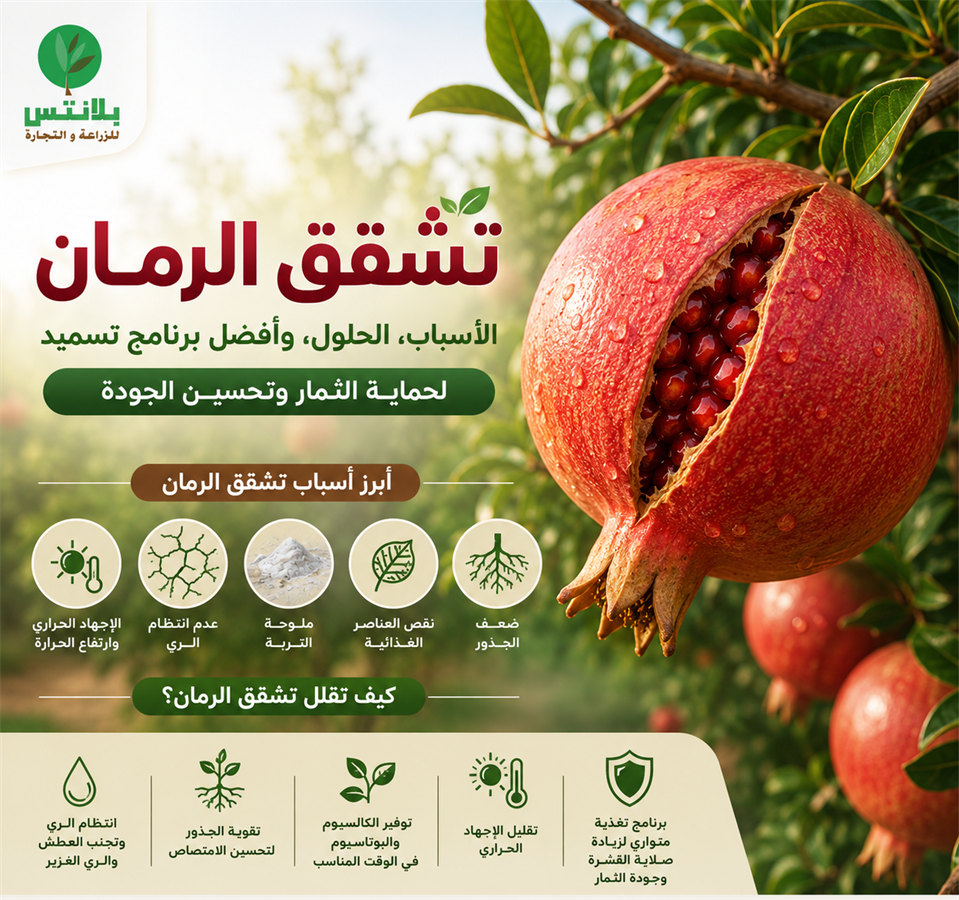
Pomegranate fruit cracking is one of the most common problems faced by pomegranate growers during July and August, when high temperatures coincide with the fruit filling stage and the approach of harvest. Fruit cracking can lead to significant economic losses by reducing fruit quality, lowering market value, and increasing susceptibility to fungal diseases and insect infestations.
Many growers search for answers to questions such as:
In this article, we discuss the main causes of pomegranate fruit cracking, effective prevention methods, and a balanced nutrition program that helps improve fruit quality and reduce cracking.
Pomegranate fruit cracking is the splitting or bursting of the fruit rind due to the inability of the outer peel to withstand the internal pressure created by the expanding arils during fruit development. It usually occurs during the final stages of fruit growth, especially when trees experience sudden changes in irrigation or temperature.
The severity of cracking varies from one orchard to another depending on irrigation management, soil conditions, root health, and overall plant nutrition.
Irregular irrigation is the leading cause of pomegranate fruit cracking.
When trees experience drought stress followed by heavy irrigation, the fruits absorb water rapidly, increasing internal pressure while the peel cannot expand at the same rate, causing it to split.
Maintaining consistent soil moisture is more important than simply increasing irrigation volume.
Heat waves increase water loss from the plant and negatively affect physiological processes and nutrient transport.
As a result, the incidence of fruit cracking increases during the hot summer months, particularly when high temperatures are combined with irregular irrigation.
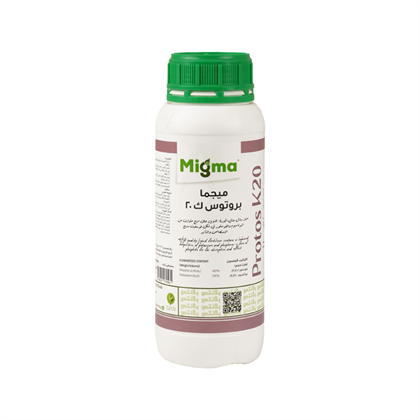
To help reduce heat stress, Megma Protus can be incorporated into the nutritional program to support trees during periods of high temperatures and maintain their physiological performance.
High soil salinity directly reduces the roots' ability to absorb water and essential nutrients, even when they are present in sufficient quantities.
Over time, salinity weakens root growth and limits the uptake of calcium and potassium, increasing the likelihood of fruit cracking.
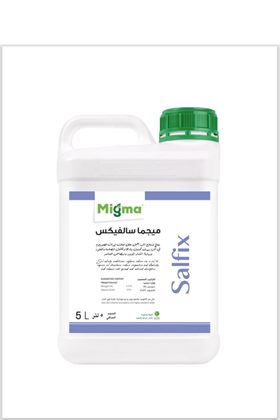
Improving root-zone conditions and managing salinity are essential steps in reducing this problem. Megma Salvix can be included in the management program to help improve nutrient uptake under saline conditions.
Calcium is one of the most important nutrients responsible for strengthening cell walls and improving fruit rind firmness.
When calcium is deficient, the fruit peel becomes weaker and more susceptible to cracking as the fruit expands.
Potassium regulates water movement within the plant, enhances sugar transport to the fruit, and improves overall fruit quality.
Potassium deficiency can result in poor fruit filling and a higher risk of fruit cracking.
A healthy root system is the foundation of any successful fertilization program.
When roots become weak due to salinity, diseases, or poor soil aeration, the tree's ability to absorb water and nutrients declines, increasing the risk of fruit cracking.
Before fruit cracking occurs, trees may show several warning signs, including:
Early detection of these symptoms allows timely corrective action before the problem worsens.
Once fruits have cracked, they cannot be repaired. However, further cracking can be minimized through an integrated management program that includes:
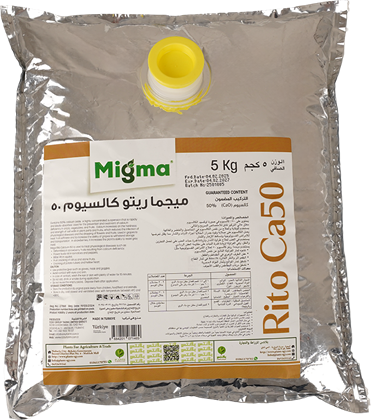
Megma Rito can be used as a calcium source to strengthen cell walls, improve rind firmness, and reduce cracking caused by weak fruit skin.
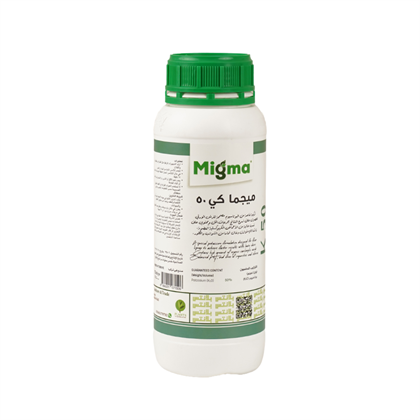
Megma K provides potassium to enhance sugar translocation, improve fruit filling, and regulate water movement within the plant.
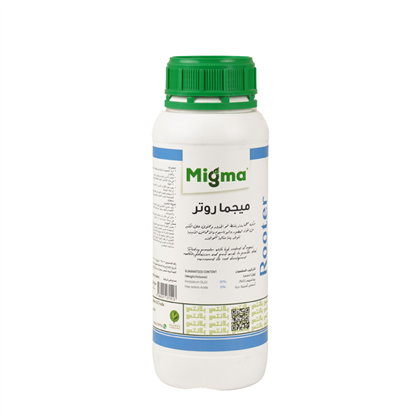
Megma Rooter helps stimulate root development and improve nutrient uptake, especially under salinity and environmental stress conditions.
Where soil salinity is a concern, Megma Salvix can be incorporated into the fertilization program to improve root-zone conditions and increase nutrient absorption efficiency.
During periods of high temperatures, Megma Protus helps plants tolerate heat stress and maintain efficient physiological activity.
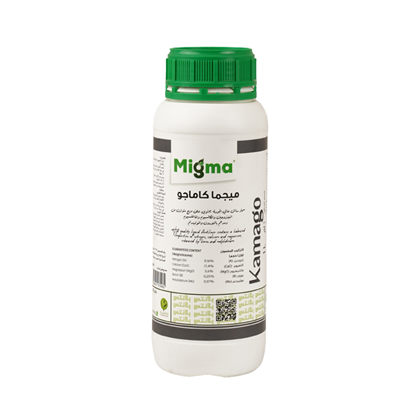
Megma Camago can be applied during the fruit filling stage. It contains calcium, magnesium, and boron, helping improve fruit quality and enhance rind strength.
To produce high-quality fruits:
Pomegranate fruit cracking results from several factors, including irregular irrigation, high temperatures, soil salinity, weak roots, and deficiencies of calcium or potassium.
No. Once fruits have cracked, they cannot be repaired. However, proper irrigation, balanced nutrition, and good orchard management can significantly reduce additional cracking.
No. While calcium is essential, other factors such as soil salinity, heat stress, weak root systems, and irregular irrigation also play major roles.
The ideal fertilization program depends on tree age, growth stage, and soil analysis. Generally, it includes calcium and potassium supplementation, root stimulation, salinity management, and heat stress reduction.
Pomegranate fruit cracking can be significantly reduced by understanding its causes and implementing preventive management practices. Consistent irrigation, heat stress mitigation, salinity management, a healthy root system, and adequate supplies of calcium and potassium are all essential for producing high-quality fruits with minimal cracking.
At Plants for Agriculture & Trade, we provide integrated crop nutrition solutions for pomegranate growers, including Megma Rito for calcium nutrition, Megma K for potassium supply, Megma Rooter for root stimulation, Megma Salvix for salinity management, Megma Protus for heat stress tolerance, and Megma Camago for balanced nutrition—all as part of a comprehensive technical program designed to improve productivity and fruit quality.