Loading
The Importance of Therapeutic Plant Nutrition in Combating Environmental Stress
Plants in modern agricultural systems face many environmental stress factors that can directly affect growth and productivity. These factors include high temperatures, drought, salinity, weather fluctuations, and nutrient imbalances in the soil. Such conditions can weaken vital processes within the plant, leading to reduced growth efficiency and a decline in crop quality.
For this reason, therapeutic plant nutrition has become one of the most important modern agricultural practices that farmers rely on to improve a plant’s ability to tolerate difficult environmental conditions and restore its biological activity.
Therapeutic plant nutrition is the process of supporting plants with essential elements and bioactive compounds that help them overcome the effects of environmental stress and improve the efficiency of physiological processes within the plant.
Its role is not limited to compensating for nutrient deficiencies; it also extends to stimulating vital biological processes and promoting the plant’s natural growth.
When plants are exposed to environmental stress, many vital processes are affected, such as photosynthesis, nutrient absorption, and cell division. Therefore, providing biologically active compounds helps the plant restore its physiological balance and improves its ability to continue growing and producing.
Seaweed extracts are among the most important natural compounds used in therapeutic plant nutrition programs due to their ability to support plant growth and enhance resistance to stress.
One of the most widely used seaweed extracts in agriculture is Ascoophyllum nodosum, which is known for its rich composition of bioactive compounds that stimulate physiological processes within the plant.
These extracts contain several natural plant hormones, including:
These hormones play a significant role in stimulating vegetative growth, promoting cell division, and regulating vital processes within the plant.
Seaweed extracts also contain vitamins, polyphenols, and antioxidants that help plants withstand stress caused by heat, drought, or salinity, enhancing their ability to maintain biological activity.
Adding natural bioactive compounds to plant nutrition programs contributes to:
Some natural compounds, such as mannitol, also play an important role in reducing stress effects. Mannitol acts as an osmotic regulator within plant cells, helping plants adapt to harsh environmental conditions.
Potassium is also considered one of the key elements in stress management programs, as it helps regulate water movement within the plant and improves the efficiency of vital processes, supporting the plant during periods of stress.
With the challenges facing modern agriculture, it has become essential to incorporate natural extracts and bioactive compounds into fertilization and plant nutrition programs. These compounds not only improve plant growth but also enhance the plant’s ability to utilize nutrients and fertilizers more efficiently.
Using products based on seaweed extracts rich in bioactive compounds helps support plants during sensitive growth stages and improves their ability to adapt to changing environmental conditions. Ultimately, this leads to improved crop quality and increased productivity.
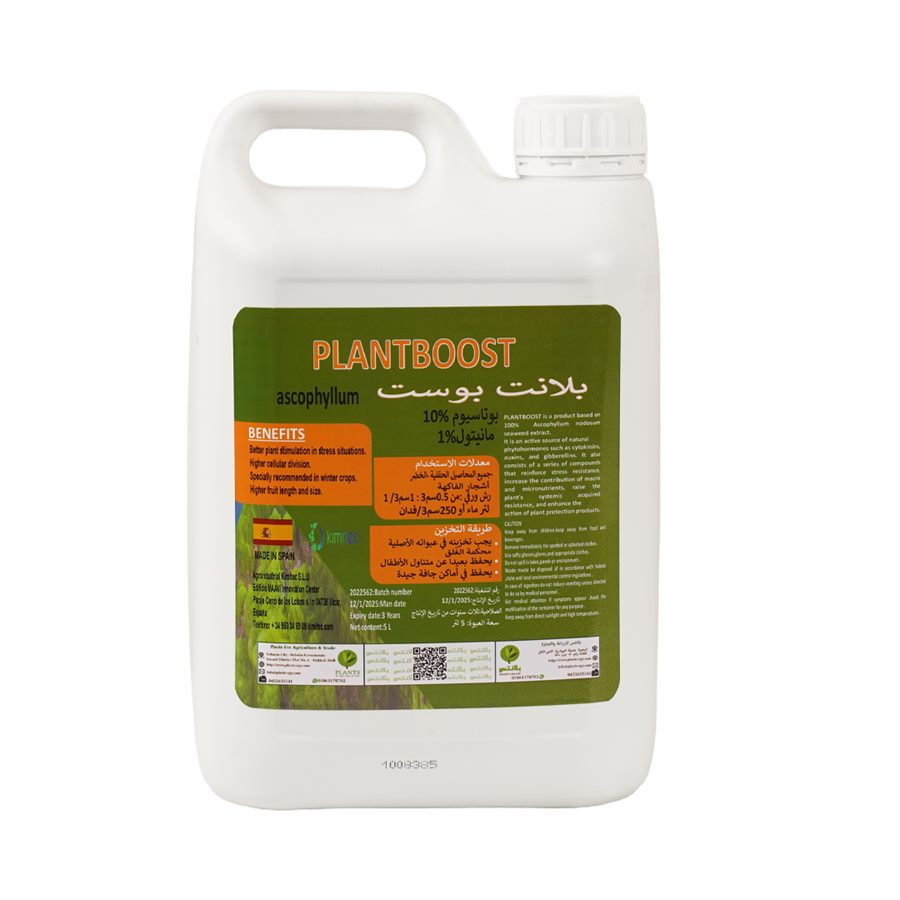
Seaweed extracts (Plant Post) can be used within therapeutic plant nutrition programs through foliar application at a rate of:
200 – 250 cm³ per 100 liters of water
This helps support plant biological activity and enhances its ability to resist environmental stress across different crops.