Loading
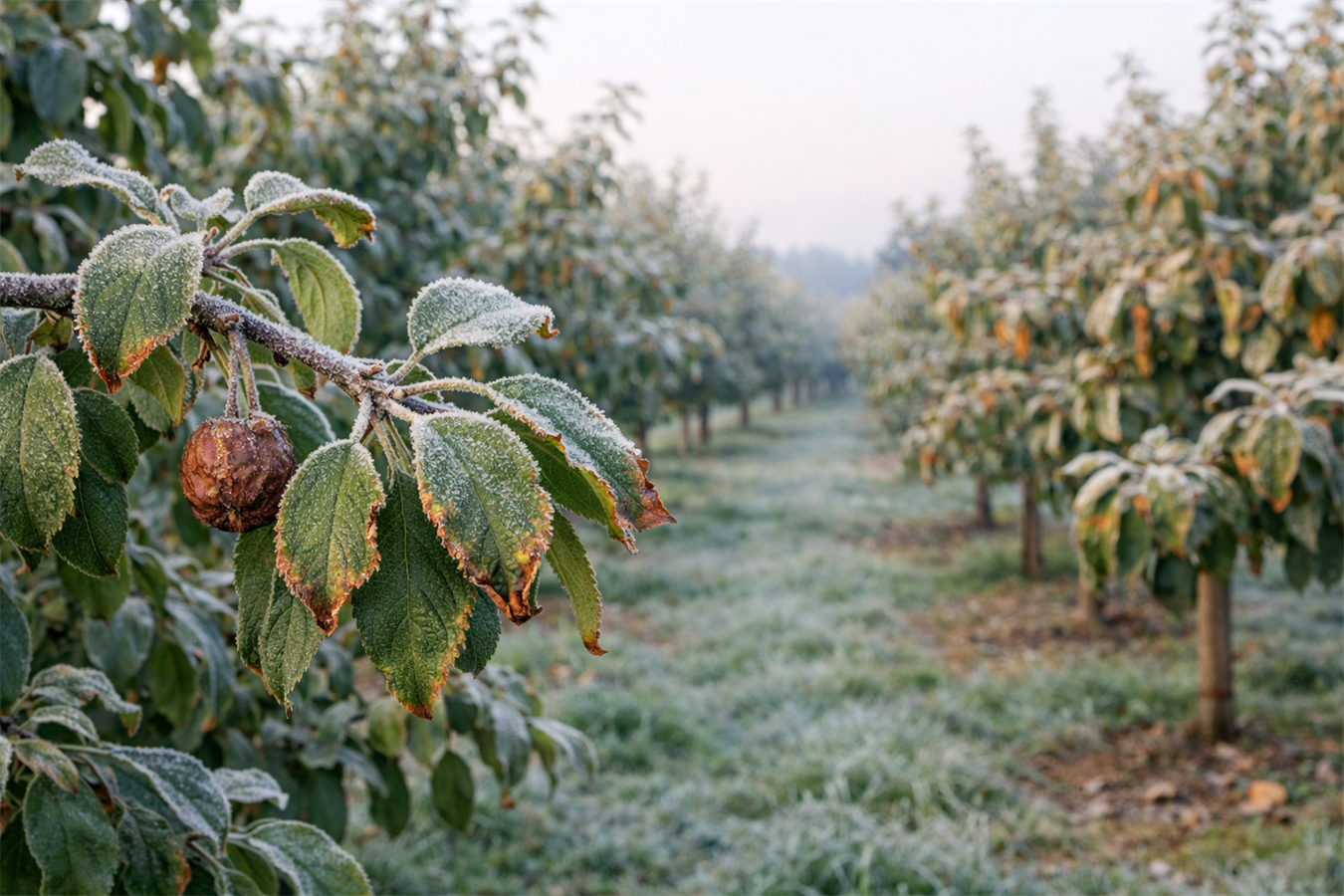
Frost and Its Impact on Fruit Trees: Symptoms and Proper Management
With the drop in temperatures during winter, fruit trees are at risk of frost, one of the most severe weather factors that can cause significant crop losses if not properly managed. Frost is a common phenomenon that usually occurs at dawn due to the sharp decrease in temperature.
In this article, we review the effects of frost on trees, the main symptoms of frost damage, and how to properly manage affected trees to minimize losses.
Agricultural frost occurs when the air temperature or the plant surface temperature drops to 0°C (32°F) or below, causing the plant’s sap to freeze inside the cells. This freezing damages plant tissues and negatively affects the tree’s growth and productivity.
Frost symptoms on trees become noticeable a few hours to days after exposure. The main symptoms include:
Burnt leaf edges turning brown or black
Wilting leaves and, in some cases, leaf drop
Blackened growing tips and young branches
Weak overall growth and delayed flowering
Flower drop or poor fruit set later
Damage is usually more pronounced in young or newly planted trees.
The degree of frost sensitivity varies by species and age. The most frost-sensitive trees include:
Citrus trees
Mango trees
Grapevines
Olive trees
Newly planted fruit trees
After frost exposure, the tree enters a state of severe stress, where growth temporarily halts and the roots’ ability to absorb nutrients weakens. In some cases, the current season’s crop, or even the following season’s yield, may be affected if the damage is not properly managed.
Some farmers make mistakes that worsen the damage. The most common errors include:
Early pruning before assessing the extent of damage
Random fertilization without considering the tree’s condition
Overwatering without actual need
These practices can increase plant stress rather than help recovery.
To minimize frost effects and help trees recover, it is recommended to:
Wait until the damaged areas become clear before any intervention
Remove damaged parts at the appropriate time
Support trees with balanced nutrition to stimulate growth
Monitor new shoots and ensure their health
Frost is a natural phenomenon that cannot be completely prevented. However, awareness of its symptoms and proper management of affected trees can significantly reduce losses. Careful monitoring and thoughtful intervention are key to maintaining healthy trees and protecting the winter crop