Loading
Soil salinity is one of the most common agricultural problems, especially in arid and semi-arid regions. Although it may not be clearly visible at early stages, its cumulative effect leads to weak plant growth, reduced yields, and lower crop quality if not managed properly using scientific methods.
Soil salinity refers to the accumulation of soluble salts—particularly sodium salts—in the root zone, which negatively affects the plant’s ability to absorb water and essential nutrients.
Soil salinity can result from several factors, including:
Irrigation with high-salinity water.
Poor agricultural drainage and high groundwater levels.
Excessive or unbalanced use of chemical fertilizers.
Heavy soil texture and poor soil aeration.
The negative impact of salinity appears through several symptoms, such as:
Slow plant growth and weak root development.
Yellowing of leaves and burning of leaf edges.
Poor nutrient uptake despite their availability in the soil.
Noticeable reduction in yield quantity and quality.
High salt concentration in the soil causes osmotic stress, which prevents roots from absorbing water efficiently. In addition, sodium ions replace essential nutrients on soil particle surfaces, leading to soil compaction, poor structure, and reduced nutrient availability.
Good drainage is a fundamental step to reduce salt accumulation in the root zone.
Using suitable irrigation water to leach excess salts below the root zone.
Soil conditioners play a vital role in salinity management by:
Replacing harmful sodium ions.
Improving soil structure and reducing compaction.
Enhancing soil aeration and root spread.
Improving nutrient uptake efficiency.
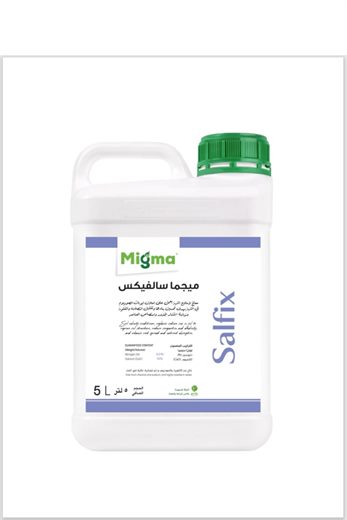
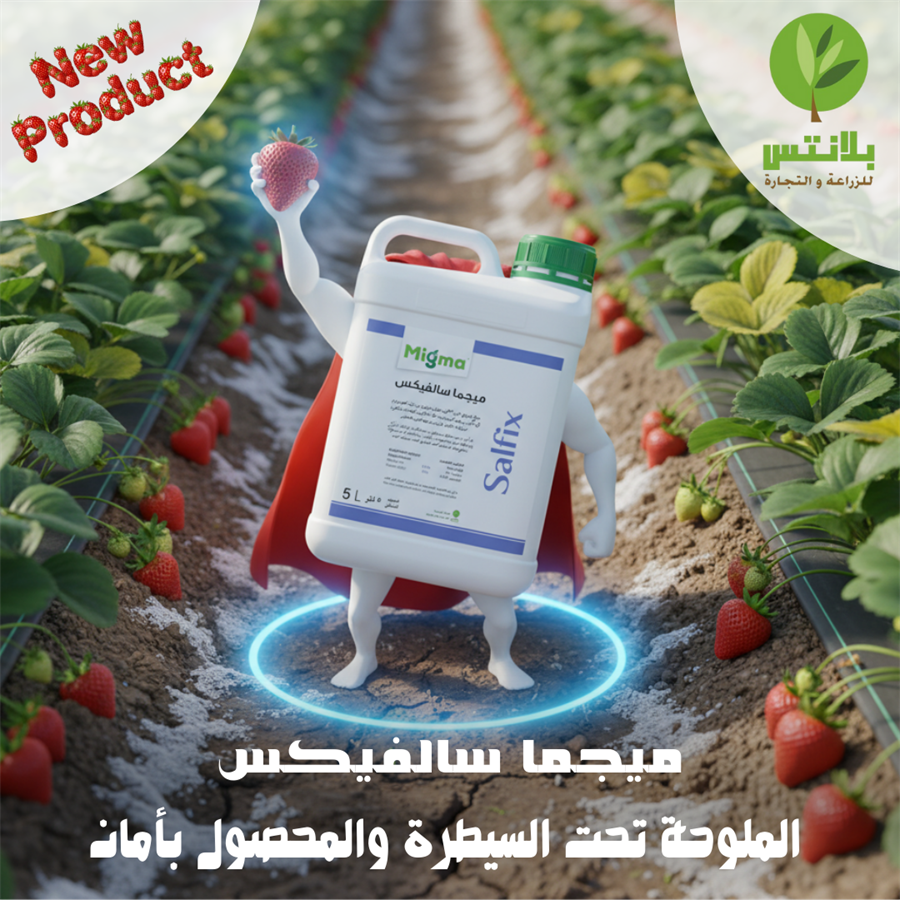
MIGMA SALFIX is one of the effective solutions offered by Plants to manage soil salinity. It works by:
Replacing sodium ions attached to soil particles.
Improving the physical and chemical properties of the soil.
Reducing alkalinity and soil compaction in salt-affected lands.
Enhancing root development and nutrient absorption.
Using MIGMA SALFIX as part of an integrated soil management program helps restore soil vitality and achieve balanced growth and higher crop productivity.
A well-planned and balanced fertilization program helps minimize the negative effects of salinity and improves nutrient use efficiency.
Early intervention in salinity problems significantly increases the chances of restoring soil productivity and avoiding economic losses caused by yield deterioration.
Soil salinity is not an unsolvable problem, but it requires accurate diagnosis, proper management, and effective solutions to maintain soil health and ensure sustainable crop production.
📌 Healthy soil is the foundation of successful farming.